
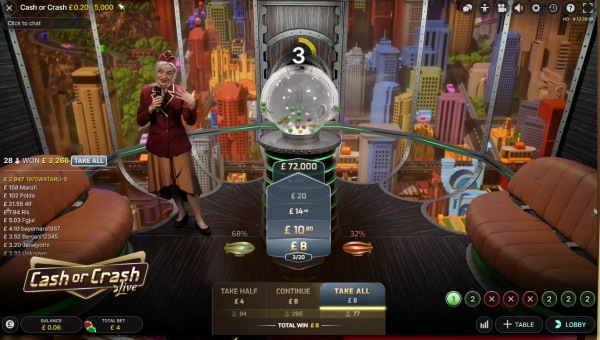
The game Cash or Crash Live creates its own niche in the live game show world cashorcrashcasino.com. Its magic lies in a powerful blend of studio spectacle and game design that makes each round a personal challenge of nerve. This is no a mere spin of a roulette table. In this experience, you are in control, actively deciding that influence your payout. The premise hooks you with an increasing multiplier, then dares you to grab it before a hidden „crash” wipes the slate clean. To fully benefit from the game, you should see beyond the flashy show and grasp its real function. Let’s analyze the stages, the host’s function, the odds involved, and what players can realistically do to steer through the excitement.
The Main Goal and Basic Flow
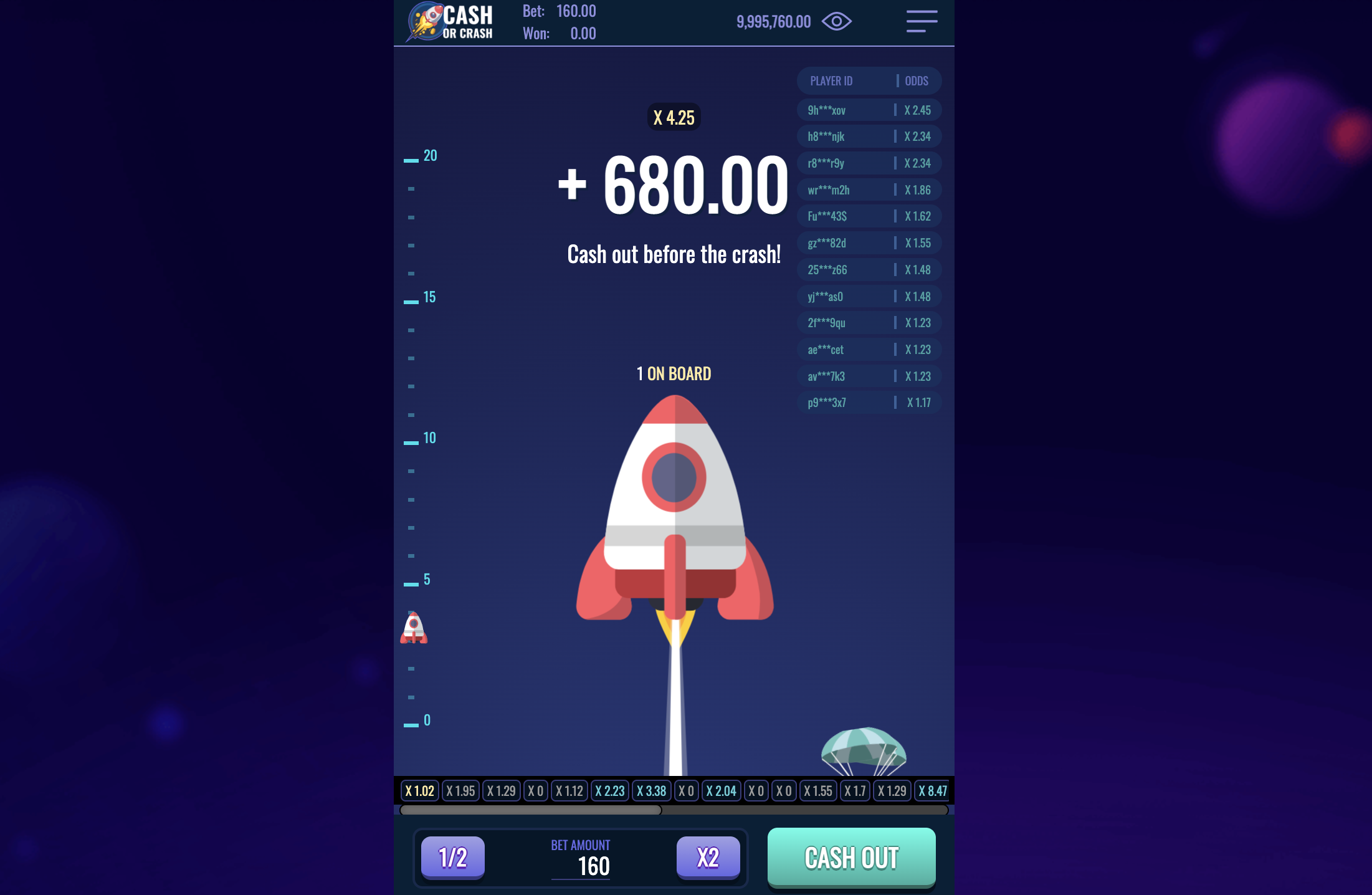
The goal of Cash or Crash Live is easy on the outside. You have to decide when to cash out a increasing multiplier before a hidden „crash point” ends the game and claims your earnings for that level. Each game commences with players putting bets. A rocket then launches its journey, and a multiplier starts climbing from 1x. The ride has several levels. Pre-launch, a hidden crash multiplier is chosen for every stage, secret from nobody. As the number increases, players individually chooses to hit „Cash Out,” fixing that multiplier on their stake, or to stay on board. If the rocket hits the hidden crash point prior to a player exits, they surrender their stake for that round. This cycle of risk and reward repeats over various rounds. Surviving players grow their profits incrementally.
Dissecting the Game Stages
Consider the game as a collection of different chapters, each a new bet. Avoiding a crash doesn’t knock you out. You advance to the subsequent stage with your accumulated winnings secure, then start the risk process anew on the next leg of the rocket’s journey. This structure is paramount. It creates a narrative, with tension that mounts as you progress. The host heightens the drama, calling out how many players are still staying on the rocket as the multiplier reaches impressive heights. First rounds often see cautious plays. Advanced rounds, with their jackpot-level multipliers, entice you to risk the profit you’ve previously won. This structure is the essence of the game’s excitement. It demands a sequence of separate, stressful decisions instead of a single one.
From Safe to Dangerous: The Risk Escalation

Notice the colorful route the rocket follows. It’s a key part of the game’s language. The first part is usually a „Green Zone,” a lower-risk phase where a crash is still a possibility. Afterward, the rocket might move into an „Amber Zone,” a clear warning that hazard is increasing. The concluding section is the „Red Zone.” Here, multipliers are their highest, but the likelihood of a crash is mathematically at its peak. These colors are more than ornamentation. They provide a quick visual for the degree of risk at any moment. They turn an theoretical probability feel concrete. Knowing the game is deliberately alerting you about growing volatility is a key piece of tactical knowledge.
Mathematical Underpinnings and Variance
Let’s examine the data that drive the game. The crash multiplier for each stage is based on a defined probability model. Common, lower multipliers like 1.2x or 1.5x are very likely to occur. Sky-high multipliers can occur, but they are exponentially more improbable. This model maintains the game fair. The regular, small crashes finance the rare, huge potential payouts. The RTP figure is a expected percentage over millions of plays. In a single gaming session, the swings are dramatic. You’re not wagering against the house in a conventional sense. You’re making choices against a secret, unpredictable number. Remember these points:
- Separate Rounds: Every round’s crash point is an independent occurrence. A crash at 1.2x in stage one tells you nothing about stage two.
- No Predictable Sequences: The RNG rules out any predictable sequences. Historical crashes or big wins do not influence what comes next.
- House Edge: The game’s design includes a built-in house edge, which is shown in the publicly disclosed RTP from the provider.
Methodological Structures and Player Psychology
No strategy can overcome the inherent randomness. But you can use structured methods to control your funds and your feelings. The key trade-off is a trade-off. Do you secure fixed returns, or aim for exponential growth? Users often adopt strategies like the „Fixed Cash-Out.” With this approach, you choose ahead of time to withdraw at a certain multiplier, say 2x, in every round. This aims for steady, small profits. The opposite is the „Let It Ride” method, where you risk multiple stages for a chance at a monster payout, acknowledging that losses will happen. A more strategic method is the „Percentage Bankroll” method, where you adjust your wager amount based on your current winnings. The biggest factor, though, is in your head. Can you fight the „greed factor” when the ratio climbs? Can you avoid frustration after an premature loss? Your most powerful tool is establishing strict rules for yourself before the game even starts.
Common Pitfalls to Avoid
Watch out for a few common errors. The most harmful is „chasing” a crash. This means rashly boosting your stake after a defeat, which contradicts the game’s round-independent design. Another misstep is trusting the „hot hand” illusion, believing a sequence of big payouts is likely to carry on. Permitting the presenter’s chatter or the moves of other participants pull you away from your own established approach is widespread. Also, do not misunderstand the sections. The Amber and Red Zones are not obstacles to beat. They are signals that the hazard has spiked. Entering any stage without a clear goal turns the session from a series of choices into a complete emotional journey. That ride hardly ever concludes favorably.
The function of the presenter and RNG
The on-air host does more than talk. They set the game’s emotional pace. While they cannot influence the result, they expertly build suspense. They call out the climbing multiplier and offer live updates on what percentage of the crowd is cashing out at each level. That social cue can play tricks on your head. But remember, the host operates independently of the game’s engine: the Random Number Generator (RNG). The crash point for each stage is set by a certified RNG the instant the stage begins. This ensures fairness and total unpredictability. The host has no clue when the crash will happen. Their job is entertainment. The RNG’s job is certifiable fairness. This combination merges transparent live action with provably random results.
Finale: A Orchestration of Fortune and Selection
Cash or Crash Live is a intriguing fusion of sheer luck and deliberate selection. Its mechanics are structured to weave a tale of rising stakes, driven by a transparent RNG and brought to life by a charismatic host. Determining winning as a fun and possibly profitable game hinges on a few things. It’s not so much about predicting the unpredictable and more about grasping how the game is designed. It calls for controlling your money with discipline and managing the mental urges the game expertly triggers. By studying its levels, respecting its mathematical basis, and following a individual strategy, you can alter your outlook. You transition from confused guesswork to enlightened participation in a exceptionally intense live game show.